

Negotiating Advice
Body Language in Business: Palms
Written by Clayton Reeves for Gaebler Ventures
The hands can give an individual a great indication of someone's intentions. Learn how the use of the hands and palms can help you read someone.
Learn how the use of the hands and palms can help you read someone, and your ability to understand body language will greatly increase.
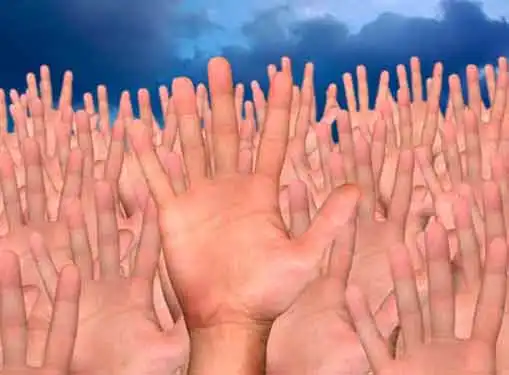
First, it is necessary to understand why the hands are such an important aspect of body language. It is more than the fact that they are our most dexterous body part, and it goes back into a more primal origin.
The hands are our most intricate body part in many ways. There are an incredible amount of bones, tendons and muscles in one of your hands. As a result, you can control your hand with great dexterity and accuracy. As I type on a keyboard, I am reminded about how easy it is to control your fingers without really having to think about what you are doing.
As a result, the hands have often been the focus of body language. Before there was spoken language, most primates understood each other through grunts or body language. As a result, we modern humans are much less adept at understanding the intricacies of our own bodies, and how they can give insight into a discussion.
Although the laws that govern us now usually make this unnecessary, the hands were generally shown as an indication that an individual was not bearing arms. This was important in more violent times when meetings could quickly turn to bloodshed. As a result, it is ingrained in our minds that showing your hands has an impact on the outcome of the meeting. There are two important positions that I am going to briefly discuss about hand positioning.
Palm Down
Generally in human history, the palm down movement has indicated an authoritative or dominant position. Think of some of the times you have seen the palm down position. One of the more obvious uses was Hitler's Nazi salute. This position gave him confidence and instilled confidence in his subordinates.
When someone tries to quite down a raucous crowd, they generally pat the air in front of them with their hands down, trying to signal authority. The palm down can be seen as trying to hold someone down, or depress their opinions and feelings. It is for these reasons that the palm down is generally only to be used when you need to appear dominating.
Palm Up
The palm up can be a signal of openness and submission. When someone puts their hands up, they show their palms. When someone goes into court and swears an oath, they show their right palm as a signal of submission to the powers of the court.
There are hundreds of other examples of how showing your palms can give you a genuine, positive and nonthreatening appearance. Speakers who use the palms up method report significantly higher positive reviews. Just be conscious of using either of these methods in excess, as they can make you look like you're trying too hard.
Learning More
Body language in negotiations is a subject that has been researched extensively. These observations are only a basic assembly of the knowledge I've garnered through human study, research and discussion with professors of the trade. I believe the best resource out there is The Definitive Guide to Body Language, by Allan and Barbara Pease. Not only is in genuinely informative, it is also undeniably humorous and enjoyable to read.
When he's not playing racquetball or studying for a class, Clayton Reeves enjoys writing articles about entrepreneurship. He is currently an MBA student at the University of Missouri with a concentration in Economics and Finance.
Share this article
Additional Resources for Entrepreneurs


Conversation Board
What's your take on the role of body language in negotiations? We welcome all comments, questions and suggestions.